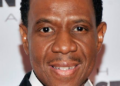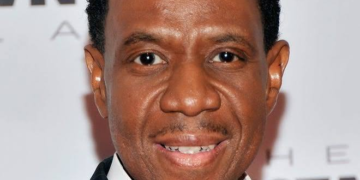









Some artists give you hits. Others give you moments. Freddie Jackson gave us the soundtrack to romance, heartbreak, slow dances and those late-night radio hours when a great love song could say what you couldn’t put into words. For me, having spent so many years behind the microphone, his music is part of the fabric of the radio experience—and hearing that Freddie Jackson has passed away at 70 is a reminder that we’ve lost another important voice from a remarkable generation of R&B.
The Grammy-nominated R&B singer, whose smooth, powerful vocals helped define the sound of romantic R&B in the 1980s, has died at the age of 70. Jackson passed away October 5, just three days after celebrating his birthday. His family announced his death but did not disclose a cause.
For those of us who grew up around the music of the ’80s, Freddie Jackson was impossible to miss. Songs like “Rock Me Tonight (For Old Times Sake),” “You Are My Lady,” “Jam Tonight” and “Have You Ever Loved Somebody” became staples of R&B radio and the soundtrack to countless relationships.
Jackson scored 10 No. 1 R&B hits, with “Rock Me Tonight” spending six weeks at the top of the chart in 1985. He also earned two Grammy nominations in 1986, including Best New Artist and Best Male R&B Vocal Performance for “You Are My Lady.”
But what I appreciate most about Freddie Jackson’s story is where that voice came from.
Born and raised in Harlem, Jackson grew up surrounded by the sounds of soul and gospel. He sang at White Rock Baptist Church, where he met longtime collaborator Paul Laurence, and he eventually found his way into New York’s club scene. Along the journey, he performed with Mystic Merlin and even sang backup for Melba Moore before launching his solo career.
His debut album, Rock Me Tonight, arrived in 1985 and immediately established him as one of R&B’s premier voices.
And Freddie didn’t simply disappear when the ’80s ended. He continued recording and performing, releasing music well into the 21st century, with his most recent album coming in 2023.
In 2024, Jackson publicly revealed that he had been diagnosed with kidney disease and used his experience to advocate for greater awareness and support for others dealing with the condition.
For me, Freddie Jackson represents something that great music always does—it takes you back.
You hear that voice, and suddenly you remember a person, a place, a relationship or a moment in your life.
That is the power of music. And that is the legacy Freddie Jackson leaves behind.